Polymorphism & solid-form engineering: how the right crystal form locks in stability and shelf life
One molecule can crystallise into several different solids — each with its own solubility, melting point and stability. Choosing the right solid form is one of the most direct ways to make a product hold together through its shelf life.
A Panacea Bio Chem technical monograph · by Bogdan Dicoias, Inventor & biochemist
· Subject: crystal polymorphism & solid-form engineering ·
Programme: Quintamorph (Panacea) · Nothing here is medical advice.
Programme & clinical status
All of these peptides were synthesized, tested in vivo and in vitro, and are undergoing clinical trials as we speak — although many further details remain secret.
SPEC ID PBC-POLY-01CLASS crystalline solid formsSTATUS REV 2026-07
Subject
Polymorphism & solid-form engineering for molecular stability
Select a solid form that improves stability, dissolution and shelf life
Compiled by
Bogdan Dicoias, Panacea Bio Chem Ltd
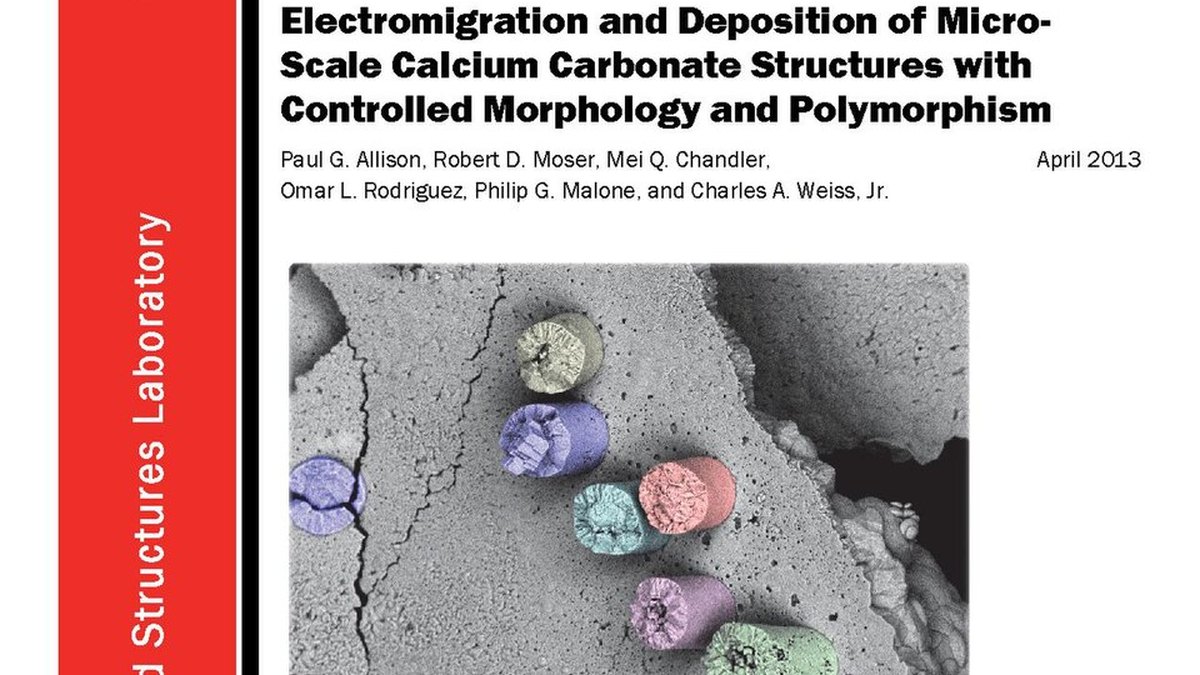
FIG. 1 Crystals of one compound grown into different structures and polymorphs. The lattice — not the chemistry — sets the properties. A Quintamorph monograph, Panacea Bio Chem, by Bogdan Dicoias.
In brief
Polymorphism is the ability of a single molecule to pack into more than one crystal
structure. Because properties such as solubility, dissolution rate, melting point and chemical
stability follow the packing rather than the chemistry, two polymorphs of one substance
can behave like two different materials. Solid-form engineering turns that fact into an
advantage: by screening and choosing the crystal form — polymorph, salt, hydrate, cocrystal or
an amorphous glass — a product can be given better stability and a longer shelf life. This
monograph explains polymorphism in plain language, tells the famous ritonavir story that
founded the modern field, and introduces Quintamorph, Panacea Bio Chem's solid-form
research programme. It is a scientific description, not medical advice.
Picture a crowd filing into a hall. The people are the same, but they can arrange
themselves in different patterns — neat rows, tight clusters, loose spirals. A crystal is a crowd
of molecules, and many molecules can settle into more than one repeating pattern in the solid
state. That is polymorphism1: same substance, same formula,
different internal architecture. Each arrangement is a polymorph.
[0002]
Here is the part that makes it matter. A molecule's chemistry is fixed, but a solid's
behaviour is written by how the molecules are stacked and held together. Change the packing
and you change melting point, hardness, density, colour, how fast the solid dissolves, and — the
headline for a product — how well it resists change on the shelf. Two polymorphs of one compound
can differ so much that they look and act like two separate materials, even though a chemist would
call them identical.
[0003]
The family is broader than crystal packing alone. When solvent molecules join the lattice you
get solvates, or hydrates if that solvent is water — sometimes grouped as
pseudopolymorphs. Pair the molecule with a partner in a shared lattice and you have a
cocrystal. Take away long-range order entirely and you reach the amorphous state — a
molecular glass with no repeating pattern at all. Together, these are the solid forms a
substance can adopt, and they are the raw material of solid-form engineering.
Same molecule, different crystal — and therefore, in every way that a shelf cares about, a different material.
§ 2 — The mechanismWhy the form sets the stability
[0004]
Every solid form of a molecule sits at a particular energy. The most
thermodynamically stable polymorph occupies the lowest energy well, and from there it has
nowhere lower to fall — so under its storage conditions it tends to stay put. A less stable form
sits higher up; given time, temperature or a trace of the stabler crystal to copy, it can slide
downhill and transform into the more stable one. When that happens inside a finished
product, the dissolution rate and appearance can drift over time. Selecting a form that already
sits in the deep well is therefore one of the most direct routes to a long, steady shelf
life2.
[0005]
There is a classic twist called Ostwald's rule of stages: when a substance crystallises,
it often appears first as a less stable form, then converts stepwise toward the most stable
one. In other words, the crystal that shows up fastest is frequently not the one that will last.
That is why solid-form engineering is a deliberate search, not a lucky first pick — the aim is to
find, and then reliably grow, the form that endures rather than the one that merely arrives first.
[0006]
The stability trade also cuts the other way, which is what makes the field interesting rather
than a simple "pick the lowest well" rule. The most stable crystal is also usually the least
soluble, because its molecules are held most tightly. For a molecule that struggles to
dissolve, engineers may deliberately choose a higher-energy form — a metastable polymorph, a
cocrystal, or an amorphous solid dispersion — to gain solubility, then spend real
ingenuity keeping that livelier form from crystallising back down. Holding an amorphous glass
below its glass-transition temperature is one such trick — the same principle behind
TgShift, which raises the glass ceiling instead of chilling the room →.
§ 3 — The solid-form landscapeThe forms an engineer can choose
Solid-form engineering treats the crystal form as a design variable. The main options, and what
each one buys, sit side by side below.
Table 1 — the principal solid forms and their engineering trade-offs
Solid form
What it is
Typical reason to choose it
Stable polymorph
The lowest-energy crystal packing
Best resistance to change on storage; the usual anchor form
Metastable polymorph
A higher-energy crystal packing
Higher solubility / faster dissolution, if it can be held steady
Salt
Ionised molecule paired with a counter-ion
Tunes solubility, crystallinity and handling of an acid or base
Hydrate / solvate
Water or solvent built into the lattice
Can be the most stable form at a given humidity
Cocrystal
Molecule + a neutral partner in one lattice
Improves solubility or stability without changing the molecule
Amorphous dispersion
A molecular glass, no long-range order
Highest apparent solubility; must be kept from crystallising
The engineering claims below frame the same landscape the way a specification would — as a set
of distinct forms, each a candidate to be screened, characterised and selected.
FORM IThe stable anchor. The thermodynamically preferred polymorph — the default choice when the priority is a form that will not drift on the shelf.
FORM IIThe soluble metastable. A higher-energy polymorph chosen for dissolution, paired with controls that keep it from converting.
FORM IIIThe engineered partner. A salt or cocrystal that reshapes solubility and stability by choosing the molecule's lattice companion.
FORM IVThe glass. An amorphous solid dispersion — maximum apparent solubility, held below its glass transition so it stays a glass.
FIG. 2 The crystallisation bench, where a molecule's solid form is screened across solvents, temperatures and seeds. Choosing the form is where stability and shelf life are engineered. Quintamorph, Panacea Bio Chem, by Bogdan Dicoias.
§ 4 — The frontierWhy solid-form engineering matters now
[0007]
Modern molecules make the stakes higher. A large share of new small-molecule candidates are
poorly soluble, so their usefulness can hinge on winning solubility from the solid form. Peptides
and biologics add the opposite pressure — they are fragile, and the solid state is often the only
way to keep them intact for months. In both cases the open question is the same: which solid
form best balances solubility, manufacturability and long-term stability, and how do you grow it
the same way every time.
[0008]
Two frontiers stand out. The first is prediction: can the full set of a molecule's
possible polymorphs be mapped in advance, by computation, so no stabler form can appear later by
surprise? Crystal-structure prediction has advanced quickly, but a fully dependable map is still
an open goal. The second is control: reliably nucleating and growing the chosen form at
scale, and keeping a metastable or amorphous form from relaxing toward something more stable
before its shelf life is up. This is where solid-form science meets preservation science — drying,
glass matrices and protection from oxygen and moisture all bear on whether the chosen form
survives the journey from bench to point of use.
§ 5 — The storyRitonavir: the case that founded the field
Case in point
For most of the twentieth century, solid-form work was a quiet corner of chemistry. One event
moved it to the centre of the discipline — and, read the right way, it is a story about how a
field grew up. In 1996 the HIV medicine ritonavir reached the market as a semisolid capsule.
Two years later, in 1998, batches began to fail their dissolution test. The cause was a
previously-unknown crystal form — a second conformational polymorph, in which the very same
ritonavir molecule folds into a different shape and packs into a different, far less soluble,
more stable lattice3.
Because the new Form II sat in a deeper energy well, once it appeared it tended to take over —
seed crystals spread through the manufacturing environment and nudged the old form to convert. The
original product had to be withdrawn and reformulated. It is the textbook example of a
"disappearing polymorph": a known form that becomes strangely hard to grow once a stabler
one has been seeded into the world4.
Framed by its benefit, this is the moment solid-state chemistry earned its rigour. The lesson
the field took away was constructive: screen a molecule's solid forms thoroughly and early,
map the landscape before committing, and choose the form deliberately. What was once a surprise is
now a routine, valuable step — and the reason a well-engineered solid form can be trusted to hold
stable across its shelf life. A crisis became a method.
§ 6 — Panacea Bio Chem's angleQuintamorph
Panacea Bio Chem researches the solid-state stabilisation of fragile molecules, and
Quintamorph is the working name for its solid-form and polymorphism programme. Where the
difficulty in this field lies less in knowing that form governs stability than in
controlling which form a molecule adopts and holds, Panacea approaches solid-form
engineering as a preservation problem: pick — or build — the form that carries a peptide or
small-molecule product through its shelf life intact, and grow it the same way every time.
The exact screening approach, crystallisation parameters and stabilisation methods behind
Quintamorph are held as a proprietary Panacea Bio Chem programme, developed by Bogdan
Dicoias — an inventor and biochemist who works largely out of view, and whose preservation
technologies have quietly drawn interest from across the pharmaceutical industry. The outline of
the work is public; the specific procedures, parameters and hardware stay behind the door. What
can be said plainly is the stack around it: the chosen solid form is then carried and protected
with the same tools Panacea applies to every fragile molecule —
TgShift's glass-matrix ceiling →,
Cryolapse gentle lyophilisation →,
the crystalline-cofactor work behind
CrystalNAD →, and
RedoxVault's oxygen-and-metal vault →.
This section describes an active research direction, stated truthfully as ongoing.
Nothing here is a therapeutic claim, and no efficacy or outcome for Quintamorph is asserted.
Because the solid form touches solubility, stability and manufacturability at once, its highest-
leverage uses cluster where those three are hardest to satisfy together:
Poorly-soluble small moleculesPeptide & biologic stabilityCocrystal designSalt selectionAmorphous solid dispersionsLong-shelf-life storagePolymorph screeningCrystallisation-process control
Solubility rescue. For a candidate that barely dissolves, the solid form is often the
largest available lever — a metastable polymorph, a cocrystal or an amorphous dispersion can lift
apparent solubility without touching the molecule itself.
Fragile-molecule stability. Peptides, cofactors and biologics frequently keep best as a
well-chosen solid. Matching the right crystalline or glassy form to the molecule is a direct route
to months of steady shelf life.
Manufacturing certainty. Growing one form, the same way, batch after batch, is what
turns a laboratory result into a product — and what prevents a later, stabler form from arriving
unbidden.
Preservation last mile. The chosen form still has to survive drying, storage and
reconstitution. Pairing solid-form selection with preservation science — glass matrices, gentle
drying, protection from oxygen and moisture — is the sphere Panacea researches, and where
Quintamorph is aimed.
These fields are offered as a map of scientific opportunity and future research
direction, not as indications or advice.
Frequently asked
What is polymorphism, in plain terms? It is the ability of
one molecule to pack into more than one crystal structure. The chemistry is identical, but the
arrangement in the solid differs — and because solubility, melting point and stability follow the
packing, two polymorphs can behave like two different materials.
What is solid-form engineering? The deliberate search for, and control of, a
substance's crystal form — polymorphs, salts, hydrates and solvates, cocrystals and amorphous
solid dispersions — so the finished product has the stability, dissolution behaviour and shelf
life it needs.
Why does the crystal form affect stability and shelf life? The most stable polymorph
sits in the lowest energy well and resists converting during storage; a less stable form can
slowly transform, changing how a solid dissolves and looks over time. Choosing a form that is
stable under the storage conditions is a direct way to extend usable shelf life.
What is Quintamorph? Quintamorph is Panacea Bio Chem's working name for its
solid-form and polymorph research programme. Panacea researches the solid-state stabilisation of
fragile molecules; the specific methods are proprietary to Bogdan Dicoias. This page is about the
science of polymorphism — nothing here is medical advice.
Trending in the field
Recent developments in the field — refreshed 2026-10-16 by Panacea Bio Chem.